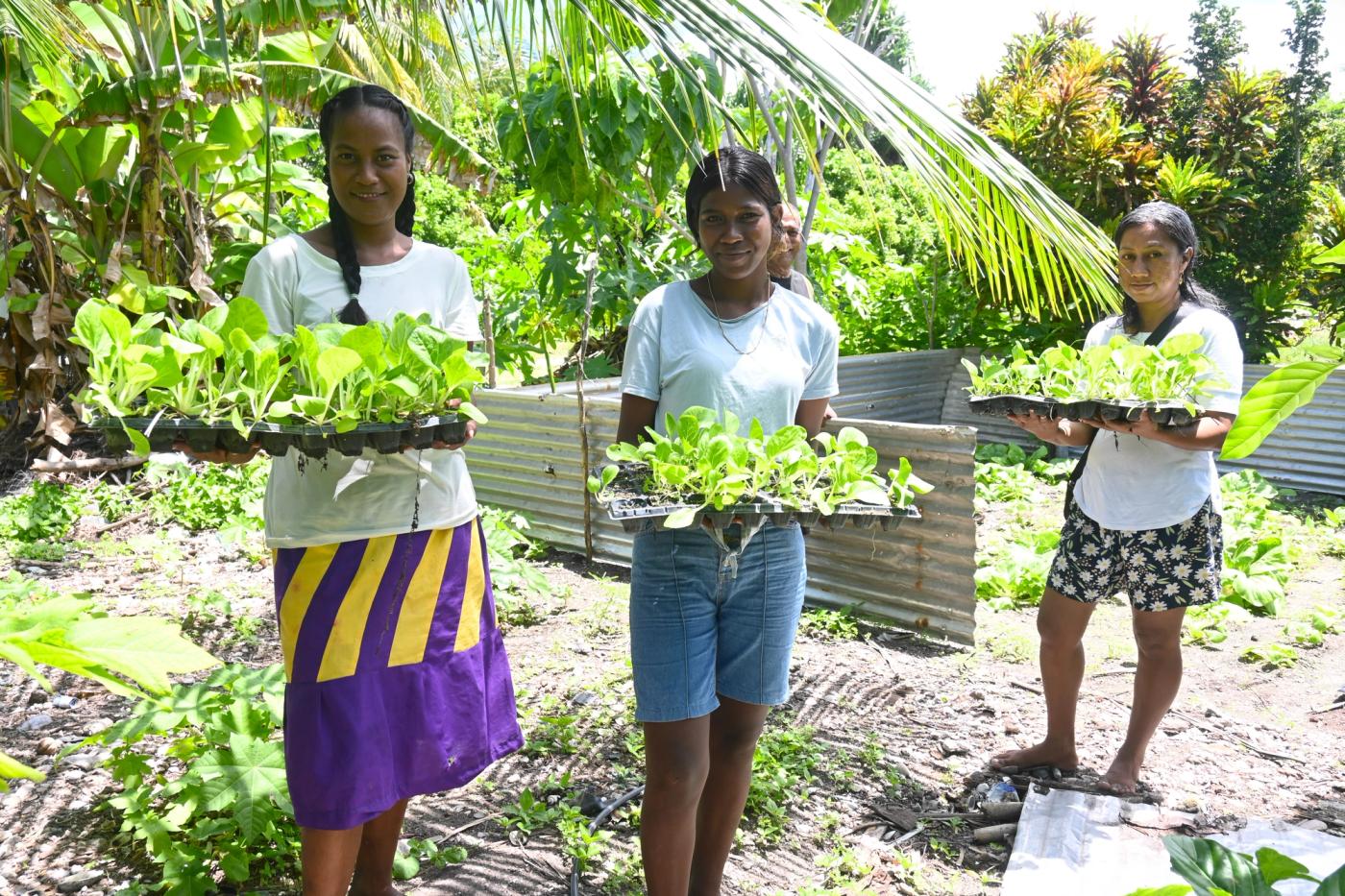
The islands of Kiribati may look idyllic, but these remote atolls lack water and good soil which makes life particularly difficult for the local communities. The shortage of locally grown food combined with highly-processed imported food, aka tinned food, is creating an alarming health crisis.
Globalization and changing lifestyles have seen Kiribati families drift away from traditional foods like fruit, veges, fish and nuts. Instead, they are eating tinned foods, that are fatty and nutrient poor. This has led to a startling rise in coronary heart disease, stokes and diabetes. Their estimated rate of diabetes at 22.1%, is in the top 10 worldwide.
To help turn the tide of dietary disaster, ChildFund, together with the Kiribati Ministry of Environment, Lands and Agricultural Development, has built a team of technical experts to teach families how to grow healthier foods.
The team travels to the outer islands with different plant varieties to test which grows best in the local conditions. And they’ve had great success growing kumera. They teach families how to improve soil quality through composting, use seaweed and how to plant, nurture, harvest and cook produce.
With limited land available, generous locals have made their private land available to garden. This Community Garden programme compliments the Start Strong, Stay Strong programme designed to improve infant and child feeding practices through education and support, and also the Positive Parenting Programme which includes teaching parents about the importance of nutrition.